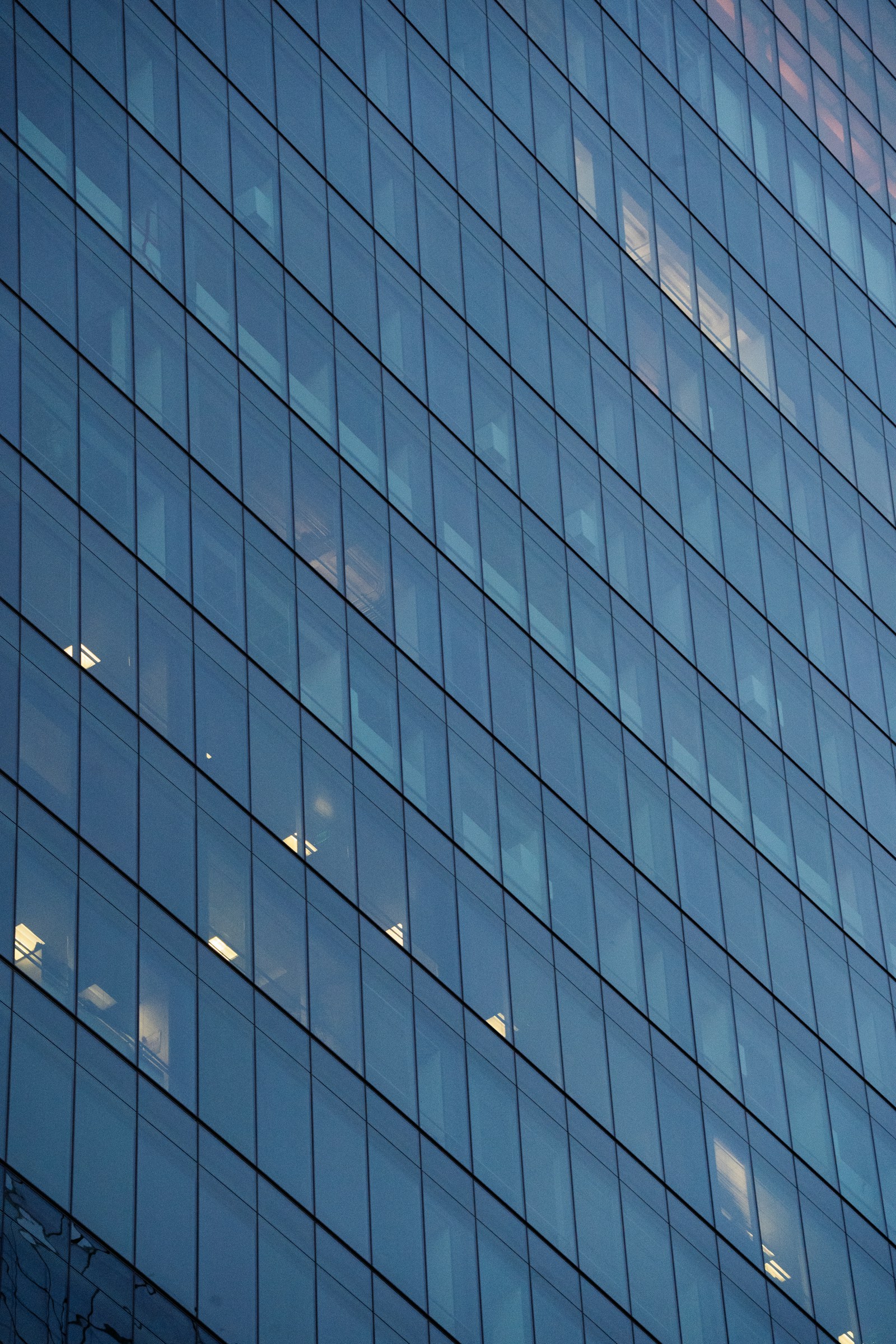
Define the dry finish before selecting equipment
Window washing, glass cleaning, and glass rinsing do not describe the same result. A maintenance rinse may improve broad exterior glazing from normal viewing distance and fit between detailed cleanings. Contact work puts a technician or tool close enough to brush, squeegee, detail mullions, and revisit individual panes. Restoration is a different scope for mineral scale, construction residue, silicone transfer, paint, metal runoff, etching, or other bonded conditions. The first question is what the owner expects to see after drying, not which machine appears fastest.
A hotel may prioritize arrival glass while accepting a maintenance rinse on upper bands. An office may want broad improvement before tours but need lobby glass detailed by hand. Operable windows, screens, balconies, aging seals, and resident-installed items can exclude selected bays. A representative test should be reviewed after drying because wet glass can conceal haze, spotting, frame runoff, and deposits that remain. The proposal should name included glass fields, frames or spandrels, the water approach, exclusions, and conditions expected to remain.
- Separate maintenance rinsing, contact cleaning, and restoration.
- Define acceptance after representative glass has dried.
- Record known leaks, damage, coatings, and permanent conditions.
- Assign recessed or detailed glass to an appropriate contact method.
Distinguish removable soil from deposits and damage
Chicago glass can collect traffic film, construction dust, pollen, bird residue, wind-driven dirt, and runoff from adjacent masonry or metal. Expressway-facing elevations, shaded courtyards, lake-facing walls, and loading areas can show different conditions on one property. Location suggests what to investigate but does not identify a stain. Maintenance history, close review, material information, and controlled testing are more reliable than a diagnosis made from the sidewalk.
Loose soil is the strongest rinse candidate. Hard-water scale, mortar, sealant, paint, adhesive, oxidized runoff, scratches, etching, coating changes, or haze inside an insulating unit may not respond. Increasing pressure or chemistry can damage glass, gaskets, coatings, and adjacent finishes. Frames matter because pockets can release soil after the main pass, and open vents or failed seals can admit water. If cracked glass, loose components, active leakage, or another unsafe condition is known, the property should involve the appropriate qualified professional before cleaning proceeds.
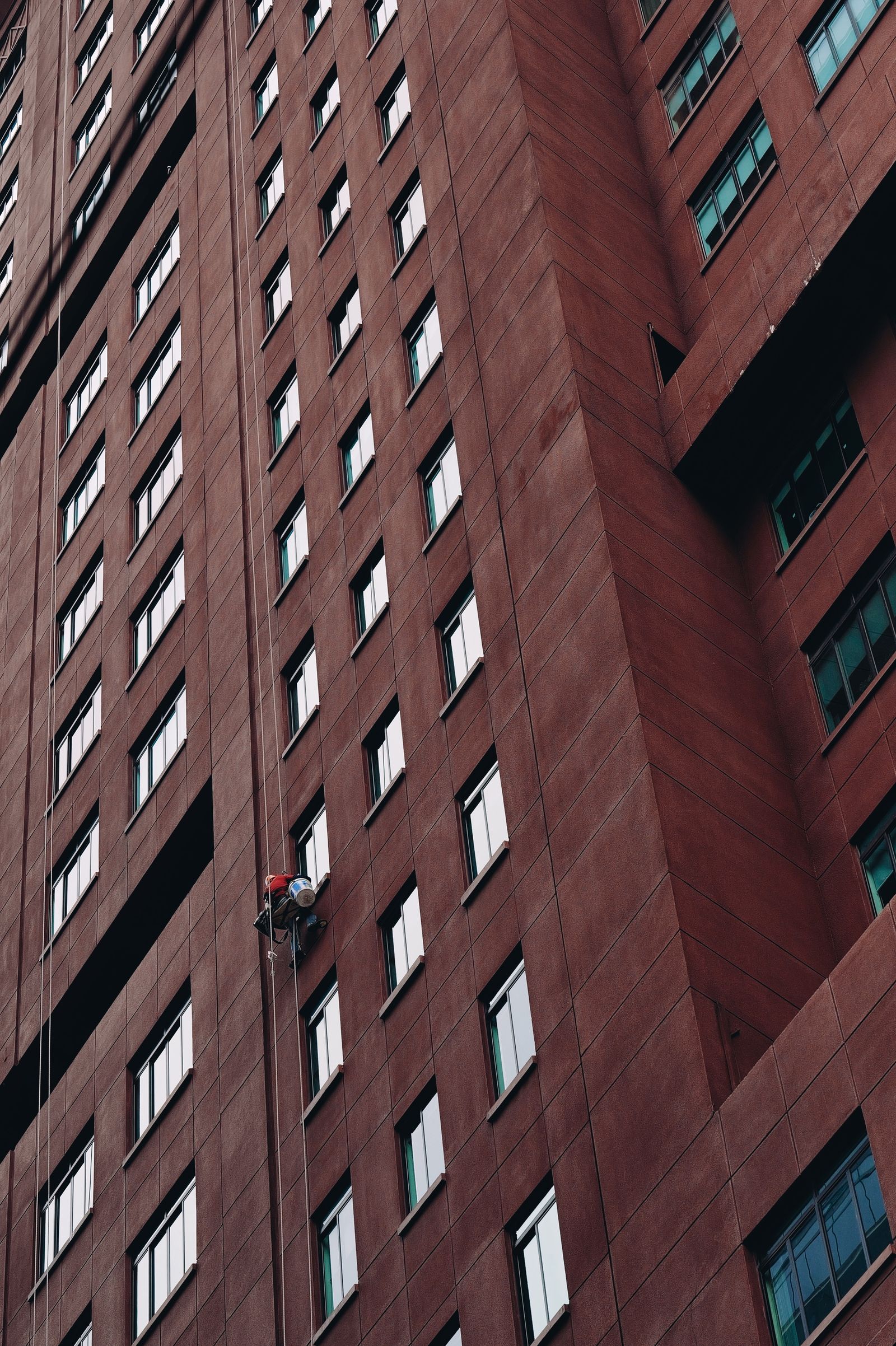
Divide the Chicago building into real work zones
One address can contain several access problems. A Loop street face may sit over constant foot traffic while the rear opens to an alley shared by deliveries, refuse collection, garages, and utilities. A river elevation may have open wind exposure but limited ground access. Setbacks, canopies, fire escapes, balconies, fins, signs, rail structures, trees, overhead lines, rooftop equipment, and neighboring towers can interrupt sight lines and water paths. Feasibility should be evaluated by elevation and sometimes by vertical band.
River North and Streeterville combine hotels, residences, offices, hospitals, retail, active curbs, and busy sidewalks. West Loop and Fulton Market mix glass construction, converted masonry, restaurants, loading, and changing pedestrian patterns. South Loop properties can add rail exposure and campuses, while Hyde Park, Bronzeville, and the Illinois Medical District bring institutional schedules, patients, students, buses, and security procedures. These district examples are planning context, not promises of serviceability. The quote must rely on the actual parcel, adjacent uses, and proposed work window.
- Review street, alley, courtyard, river, roof, and setback conditions separately.
- Map launch, recovery, water, hose, observer, and exclusion areas.
- Identify entrances, public routes, deliveries, utilities, and neighboring operations.
- Use a hybrid scope when one method cannot serve every zone.
Treat drone rinsing as one conditional access method
A drone can reduce lift use on selected upper glass fields when it can maintain useful stand-off distance, stable control, visual line of sight, and a predictable water path. It still requires a qualified operating team, launch and recovery control, water equipment, hose management where applicable, monitoring of people and vehicles, and an emergency plan. A controllable private courtyard may be a better operating area than a simple facade above a crowded public sidewalk.
Business operations must account for applicable FAA requirements, including pilot qualification, aircraft status, airspace, operating limitations, Remote ID where applicable, and conditions involving people or moving vehicles. O'Hare and Midway influence controlled airspace across the region, so an address should be screened early. Chicago Municipal Code Section 10-36-400 also addresses small unmanned aircraft and includes provisions for FAA-authorized operations. Property consent does not supply airspace authorization, neighboring access, or public-way occupancy. A proposal should keep those questions separate and provide a non-drone alternative when a required condition cannot be met.
Plan Chicago wind, water, and freezing together
Wind should be evaluated where application occurs, not only at grade. Air can accelerate around corners, descend a tower face, reverse in courtyards, or change above a setback. Lake-influenced shifts can alter direction and temperature during the day. A west face may be workable while an east return is not. The operating plan should define conservative equipment and process limits, then pause when drift, hose behavior, visibility, or surface control no longer matches the approved test condition.
Purified water may reduce dissolved minerals that contribute to spotting, but it does not remove bonded deposits or guarantee a uniform result. Volume, pressure, distance, and dwell must suit the glazing, seals, frames, and adjacent facade. Runoff can reach ledges, canopies, doors, vehicles, air intakes, pavement, and drains after the visible pass ends. Cold weather adds ice risk. Air and surface temperature, shade, wind, drainage, forecast trends, and drying time all matter. If water can freeze on a sidewalk, alley, loading area, roof, or facade component, wet work should be postponed or redesigned.
- Monitor wind and drift at the working elevation and corners.
- Confirm water source, treatment, supply route, and expected volume.
- Trace runoff across ledges, roofs, canopies, pavement, and drains.
- Use temperature and drying criteria rather than a calendar cutoff.
Build runoff and public-space controls around the property
Rinse water can collect atmospheric soil, bird residue, loose particles, cleaning product, and material from frames before reaching grade. The site walk should locate trench drains, curb inlets, roof leaders, landscaped areas, loading drains, low points, and routes toward public or neighboring property. A drain's appearance does not establish whether it reaches a storm, sanitary, combined, sump, or private system. Illinois EPA mobile power-washing guidance recommends identifying sewer systems, considering containment or recovery, and obtaining relevant permission for on-site disposal. It informs planning but does not authorize a Chicago project.
The proposal should state who will confirm the proposed route, what controls will be used, how bypass will be recognized, and what happens to recovered liquid and solids. Terms such as purified or biodegradable do not answer that question after water contacts the building. Any planned use of a sidewalk, curb lane, street, or other public right of way should also be screened through the current City process. A contractor should not promise a closure, equipment position, or alley control before the property and responsible parties confirm what the setup requires.
Use direct cleaning when rinsing reaches its limit
A lift, suspended system, rope-access provider, water-fed pole, or another direct method may be better when the finish requires brushing corners, detailing mullions, squeegeeing panes, controlled scraping, or treating isolated deposits. Lower storefronts, recessed windows, balcony dividers, deep fins, and protected returns often need a separate method even when broad upper fields can be rinsed remotely. Restoration begins with identification and testing, not stronger routine cleaning.
The closeout should show what was rinsed, what received contact cleaning, what was excluded, and what needs further evaluation. Representative photographs can document visible maintenance results without becoming an engineering or facade inspection. The first service can also establish how quickly different elevations resoil. A lake-facing wall, sheltered courtyard, and traffic-facing storefront may need different intervals. To request a quote, send the address, elevation photos, approximate height, known materials, desired finish, water access, operating windows, and known leaks or active facade work.